Female doctor checking blood pressure of senior man

Real-time health and wellness data monitoring for you and your loved ones to prevent health disasters

The incidence of stroke in Australia

[1] Deloitte Access Economics. 2020. No postcode untouched, Stroke in Australia 2020.
[2] Australian Institute of Health and Welfare 2018. Australia’s Health 2018. Australia’s health series no. 16. AUS 221. Canberra: AIHW.
[4] Deloitte Access Economics. 2020. No postcode untouched, Stroke in Australia 2020.
[5] Deloitte Access Economics. 2020. No postcode untouched, Stroke in Australia 2020.

Currently Australians experience 1 stroke every 19 minutes.[1] and without action by 2050 it is predicted that the number of first-ever strokes will increase to 1 stroke every 10 minutes.[5]

Stroke kills more women than breast cancer and more men than prostate cancer.[2]

24% of first-ever strokes occurred in people aged 54 years and under.[4]

Facts about heart attacks in Australia

More than twice as many men experience heart attacks compared to women with more men dying from heart attacks compared to women (75% higher rate*). 

  • One person dies of a heart attack approx. every 80 minutes, or on average 19 people every day. 
  • Over 150 people are hospitalised due to a heart attack every day, this is on average, one person every nine minutes. 

*After adjusting for population size and age distribution.

  1. Australian Bureau of Statistics 2023, National Health Survey 2022. 
  2. Australian Bureau of Statistics 2023, Causes of death 2022, cat. No. 3303.0, October. 
  3. Australian Institute of Health and Welfare 2023, National Hospital Morbidity Database (NHMD) 2021-22.
  4. Australian Institute of Health and Welfare 2017, Health Expenditure database, custom data request.)
nurses hands holding health symbol
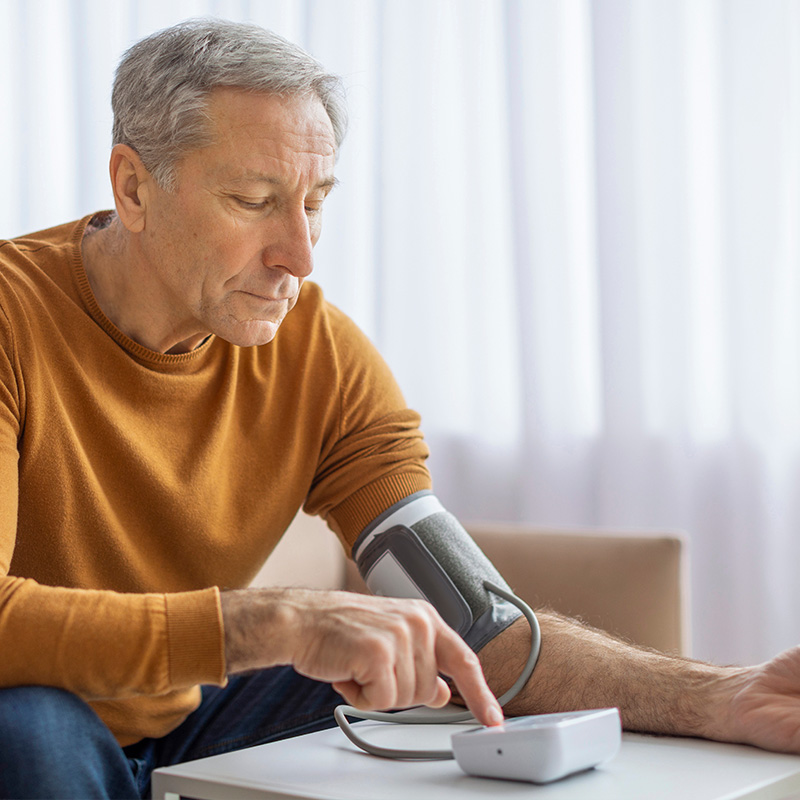
elderly man checking blood pressure

How can you prevent strokes and heart attacks?

Fortunately, there are several ways to help prevent and reduce the risk of having a stroke and/or a heart attack, along with reducing your risk of developing long-term chronic conditions. These include:

  • Understanding your risk over the next 1 – 10 years and what your main risk factors are.
  • Getting credible education on how to manage and reduce these risk factors
  • Understand what health vitals you should be monitoring and why based on your risk factors
  • Researching and identifying relevant medical wearables and other monitoring devices, that can monitor your health vitals in real-time in the comfort of your own home
  • Enrolling in a Preventative Remote Patient Monitoring program to support, monitor and guide you along the way

What are the different types of wearable health and medical devices?

  • Wireless digital Blood Pressure Monitors and Machines
  • Smart rings and smartwatches
  • Smart weight scales
  • Body composition scales
  • Smart toilet seats
  • Fitness trackers
  • Glucose meters
  • Body Temperature monitors
  • Smart clothing
  • Smart contact lenses
  • Hydration and sweat sensors
  • Wearable ECG monitors
  • Pregnancy and newborn monitors